Use of Safe and Suitable Food Packaging Materials

← Back to Policy & Governance
Policy & Governance Article | Vol 1, Issue 1

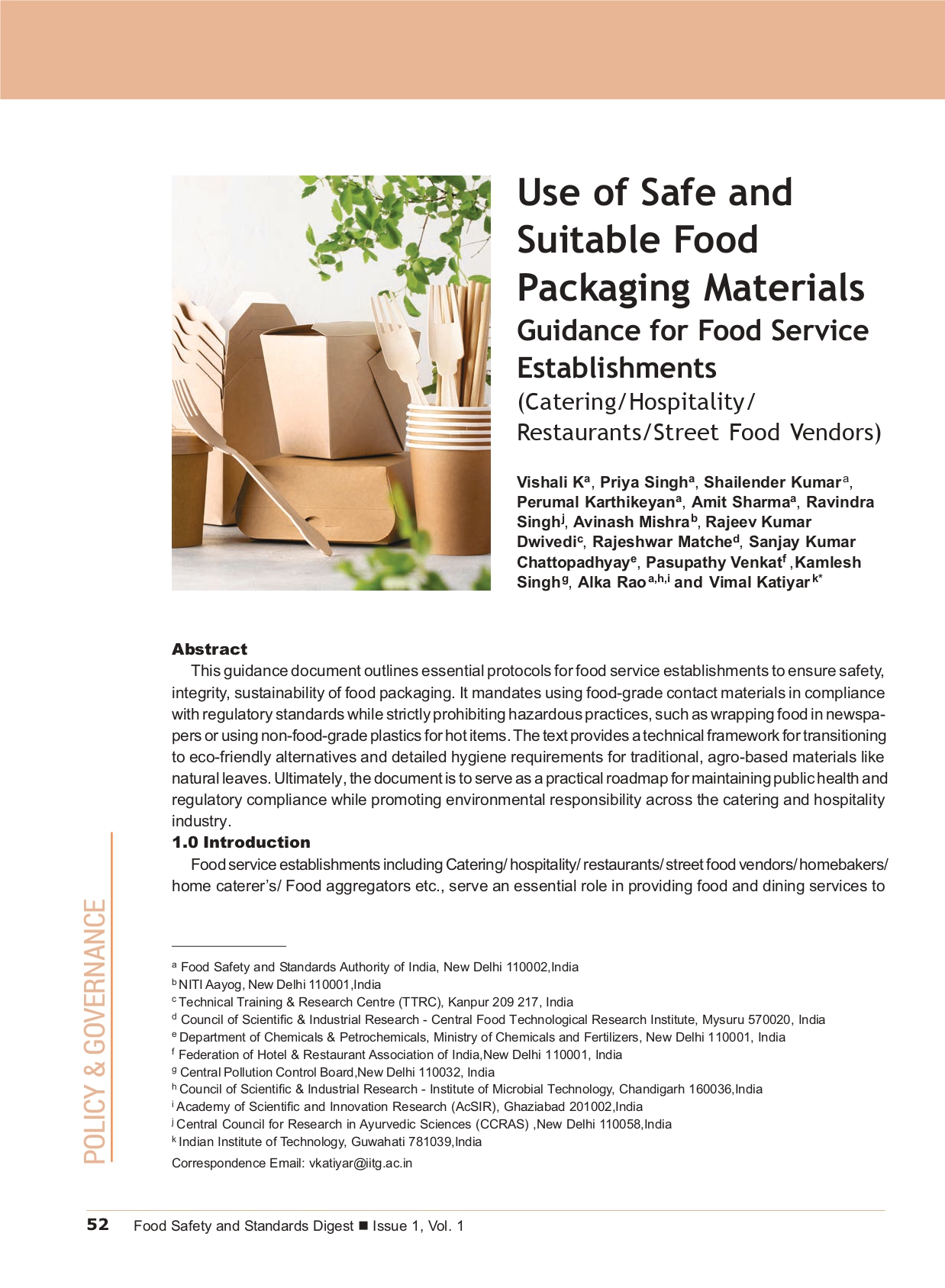
Use of Safe and Suitable Food Packaging Materials – Guidance for Food Service Establishments (Catering/Hospitality/Restaurants/Street Food Vendors)
Food Packaging Guidance

Abstract

This guidance document outlines essential protocols for food service establishments to ensure safety, integrity, sustainability of food packaging. It mandates using food-grade contact materials in compliance with regulatory standards while strictly prohibiting hazardous practices, such as wrapping food in newspapers or using non-food-grade plastics for hot items. The text provides a technical framework for transitioning to eco-friendly alternatives and detailed hygiene requirements for traditional, agro-based materials like natural leaves. Ultimately, the document is to serve as a practical roadmap for maintaining public health and regulatory compliance while promoting environmental responsibility across the catering and hospitality industry.

Keywords: Food Packaging; Food Service Establishments; Food-Grade Materials; Eco-Friendly Packaging; Food Safety

1.0 Introduction

Food service establishments including Catering/hospitality/restaurants/street food vendors/home bakers/home caterer's/Food aggregators etc., serve an essential role in providing food and dining services to consumers, whether through dine-in experiences or food delivery services. In the dynamic landscape of the food service industry, ensuring safety along with integrity of food from preparation to consumption has become a paramount concern. The packaging of food, an often-overlooked aspect, significantly impacts the safety & food quality along with overall dining experience for consumers. An integral part of this process is the selection and utilization of appropriate food packaging materials. The significance of these materials goes beyond mere containment; they serve as guardians of freshness, quality, and safety, crucially impacting both consumer satisfaction and public health.

India's vibrant street food culture is a tapestry of flavours, aromas, and culinary traditions, enticing both locals and tourists alike. From delicious chaats to spicy kebabs and delectable sweets, the streets are filled with a variety of mouth-watering delicacies. Amidst this mosaic of tastes and textures, the role of safe food packaging stands as a cornerstone in preserving not just the flavours but also the health of millions who indulge in these street-side delights.

Also, India's diverse culinary offerings within restaurants and hotels cater to a mosaic of tastes, preferences, and cultural nuances. The importance of safe food packaging in these establishments is diverse and essential.

Lively streets with countless street food vendors, the elegance of restaurant dining, and the luxury of hotel cuisines collectively paint a vivid picture of India's culinary prowess. Yet, this picturesque scene is overshadowed by unsustainable food packaging practices prevailing in these establishments, characterized by several pressing issues such as use of non-food grade packaging materials, single-use plastics, lack of sustainable alternatives, limited awareness among establishments and consumers creating challenges in regulatory compliance.

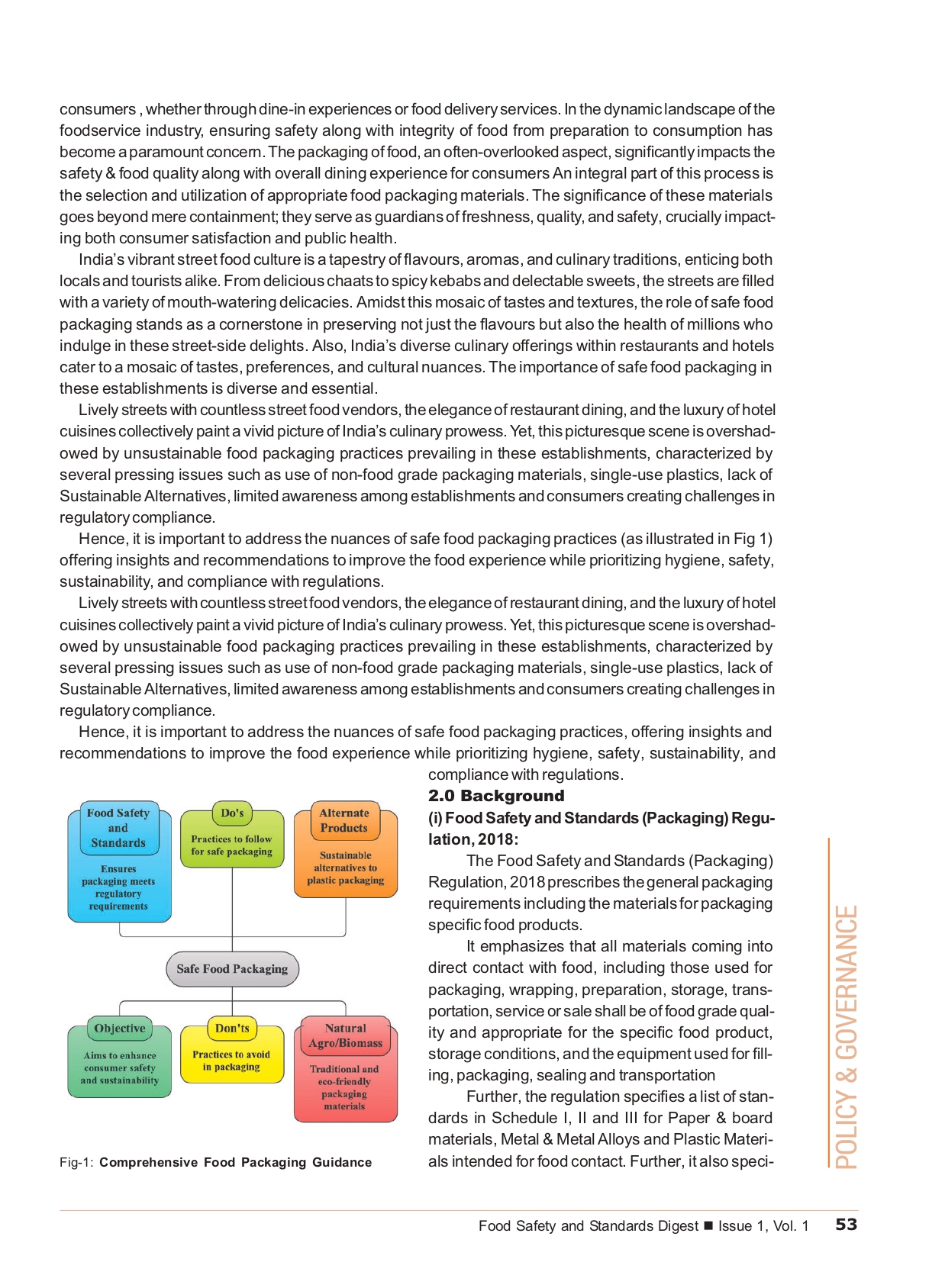
Hence, it is important to address the nuances of safe food packaging practices (as illustrated in Fig 1), offering insights and recommendations to improve the food experience while prioritizing hygiene, safety, sustainability, and compliance with regulations.

Fig 1: Comprehensive Food Packaging Guidance

Fig 1: Comprehensive Food Packaging Guidance

Safety & Integrity

Use food-grade contact materials compliant with regulatory standards

Prohibited Practices

No newspapers, non-food-grade plastics for hot items, banned single-use plastics

Eco-Friendly Alternatives

Biodegradable & compostable plastics, natural agro/biomass-based materials

Traditional Materials

Natural leaves & plant-based food contact materials with hygiene requirements

Regulatory Compliance

FSS (Packaging) Regulation 2018, migration limits, NABL certification

2.0 Background

(i) Food Safety and Standards (Packaging) Regulation, 2018

The Food Safety and Standards (Packaging) Regulation, 2018 prescribes the general packaging requirements including the materials for packaging specific food products.

It emphasizes that all materials coming into direct contact with food, including those used for packaging, wrapping, preparation, storage, transportation, service or sale shall be of food grade quality and appropriate for the specific food product, storage conditions, and the equipment used for filling, packaging, sealing and transportation.

Further, the regulation specifies a list of standards in Schedule I, II and III for Paper & board materials, Metal & Metal Alloys and Plastic Materials intended for food contact. Further, it also specifies that every food business operator shall obtain the conformity certificate by NABL accredited laboratory for packaging materials that directly or potentially come into contact with food. The regulation also mentions Specific Requirements for Primary food packaging including defined migration limits for substances released from plastic materials intended for food contact. In addition, Schedule IV provides an indicative list of packaging materials suitable for use with food products across specified categories.

(ii) Objective

The modern food service ecosystem witnesses a complex interplay between convenience-driven packaging solutions and the need for rigorous safety standards. With the increasing demand for delivery and takeaway services, the reliance on packaging has increased. This reliance, while addressing convenience, also introduces a multitude of challenges related to food safety, sustainability, and regulatory compliance.

Recognizing the critical importance of proper food packaging, the need for a comprehensive guidance document becomes evident for ensuring consumer safety and health, for compliance with regulations, to upholding quality and freshness of food and to keep in mind the environmental responsibility and sustainability.

Safe food packaging is fundamental in safeguarding consumer health. Contamination risk, improper storage conditions, and inadequate packaging materials can compromise the integrity of food, leading to health hazards. This guidance document aims to outline essential protocols and adopting best practices to reduce these risks and safeguard the safety of packaged food.

Although, food safety and standards Packaging regulation, 2018 already prescribes standards for food packaging, it does not explicitly provide guidelines or list the safety aspects for packaging of foods in food service establishments like hotels/restaurants/street vendors etc. This document attempts to bring the food packaging mechanisms/practices followed by food service establishment into the regulatory purview.

Beyond safety concerns, proper packaging contributes significantly to preserving food quality and freshness. Proper packaging materials, methods, and handling procedures can extend the shelf life of food items, ensuring that customers receive products that meet the establishment's quality standards.

Further, in an era of heightened environmental awareness, sustainable practices, including eco-friendly packaging, are increasingly valued by consumers. This document will explore sustainable packaging options that not only meet safety standards but also align with eco-conscious initiatives, showing commitment to environmental responsibility.

The committee defines the terms "Food Contact Materials" and "Food Grade Contact Material" for the benefit of the consumers and FBOs:

Creation of this comprehensive guidance document on safe food packaging in food service establishments is essential to serve as a roadmap for ensuring consumer safety, maintaining food quality, embracing sustainability, and enhancing operational efficiency.

3.0 Guidance

3.1 Safe Food Packaging/Serving Practices for Food Service Establishments

General List of Do's and Don'ts

Do's:

  1. Use only Food-Grade contact packaging materials.
  2. Ensure proper sealing to prevent leakage and contamination. Use secure closures and seals on packages.
  3. Maintain a clean and sanitized packaging area. Use clean and hygienic packaging to prevent cross-contamination.
  4. Store packaging materials in clean, dry, and designated areas, away from potential contaminants like chemicals or cleaning aids and protected from pests and rodents.
  5. Train employees on proper handling and packaging procedures to maintain hygiene and prevent contamination.
  6. Wherever required, prewashing/precleaning of the packaging materials at appropriate pressure or temperature of water shall be carried out to ensure removal of any residue in the contact surface.
  7. Use sustainable packaging materials as much as possible. Sutures, sealants or any such agents used for shaping these materials must be of food grade quality.

Don'ts:

  1. Do not pack hot foods like tea, coffee, milk, rice, curries, sambhar, gravy etc. in plastic pouches of non-food grade contact materials.
  2. Food shall not be stored or wrapped using Newspaper or any such material.
  3. Single use plastics such as plastic plates, trays, straw, cutlery (knives, spoons, forks), glasses, cups, and plastic wrapping or packing films used around items such as sweet boxes etc. which are banned under the Plastic Waste Management Rules as amended from time to time by Ministry of Environment, Forest and Climate Change (MoEF&CC) shall not be used as food packaging materials.
  4. Single-use Packaging materials shall not be reused.
  5. Do not use packaging materials with visible damage, tears, rust, chipped enamel, punctures, infested with insects or contaminated by rodents.
  6. Undesirable chemicals should not be present in the packaging area of the food service establishment.
  7. No hazardous chemicals shall be used directly/indirectly for packaging.
  8. Food packaging material should retain its integrity and shall not break or tear off or partly dissolved in food unless the said material is a defined food as per FSSR.
  9. No material containing any allergen should be used as food contact material without appropriate warning/labelling.
  10. Avoid using rusty containers, chipped enamelled containers and containers without proper coating.

Further, compliance with the Food Safety and Standards (Packaging) Regulations, 2018, as amended from time to time, is mandatory.

3.2 Alternate Products to Plastic Packaging

Use of alternate products as a substitute of plastic packaging is a dynamic subject. These materials generally offer sustainable solutions to address the growing concerns around plastic waste. As per available scientific literature, these materials help in reducing the environmental footprint but also align with circular economy principles while expanding the possibilities for safer and eco-friendly packaging.

Biodegradable plastics can be defined as "plastics, other than compostable plastics, which undergo degradation by biological processes in a specific environment such as soil, landfill, sewage sludge, freshwater, marine, without leaving any microplastics or visible or distinguishable or toxic residue, which has adverse environment impact" for packaging applications to safeguard our eco-system as far as the end of life option of packaging is concerned. It is very important if such food packaging should also feature as compostable plastics, means such plastic packages must demonstrate the ninety percent by mass degradation of carbon present in its plastic building block into Carbon Dioxide within 180 days under specified composting conditions. Examples include ISO 17088 (Plastics, Organic recycling specifications for compostable plastics), ASTM D6400 (Standard Specification for Labeling of Plastics Designed to be Aerobically Composted in Municipal or Industrial Facilities), and IS 17899T (Tentative India Standard for assessment of Biodegradability of Plastics in Varied Conditions) and any other standards which may be published globally from time to time. Plastics such as PCL (Polycaprolactone), TPS (Thermoplastic Starch), PVA, PBS, PBAT, PLA, PHB and its blends and composites are considered as compostable plastics.

Food service establishments shall comply to the following requirements while use of these materials:

  1. Food Contact Materials made of biodegradable plastics shall be labelled with the information of specific conditions required for degradation and duration required for degradation.
  2. Food Contact Materials made of compostable Plastics shall be labelled as "degradable only under Industrial Composting Conditions or else specified."
  3. Labels, if any, pasted on such FCMs should be made of such alternate plastics.
  4. Food service establishments shall keep records of Total Migration testing conducted in an NABL Laboratory for such materials. The Total Migration Limit for such materials under IS:9845 (Bureau of India Standards, 2020) is restricted to 60 mg/Kg or 10 mg/dm3.
  5. Overall Migration tests shall be performed to ensure that there is no colour migration from FCMs.
  6. Printing Inks used on such packaging shall conform to IS:15495 (Bureau of Indian Standards, n.d.), ensuring printed surfaces never contact food directly.
  7. The transparency of such packages shall not be less than 85%.

3.3 Natural Agro/Biomass Based Food Packaging/Serving Materials (Biopolymer Based Alternate to Single Use Plastics)

Natural fibres and leaves have served as food packaging and serving items for centuries. Various leaves from different plant families have traditionally functioned as single leaf plates, food wrappers, stitched leaf platters, and food packaging since ancient times (Kora, 2019). However, their application has traditionally been region-specific, purpose-driven, and tied to particular occasions and food types, limiting their universal recognition. Numerous research studies have demonstrated their positive contribution to the food experience, including enhancing aroma and freshness and even offering curative properties.

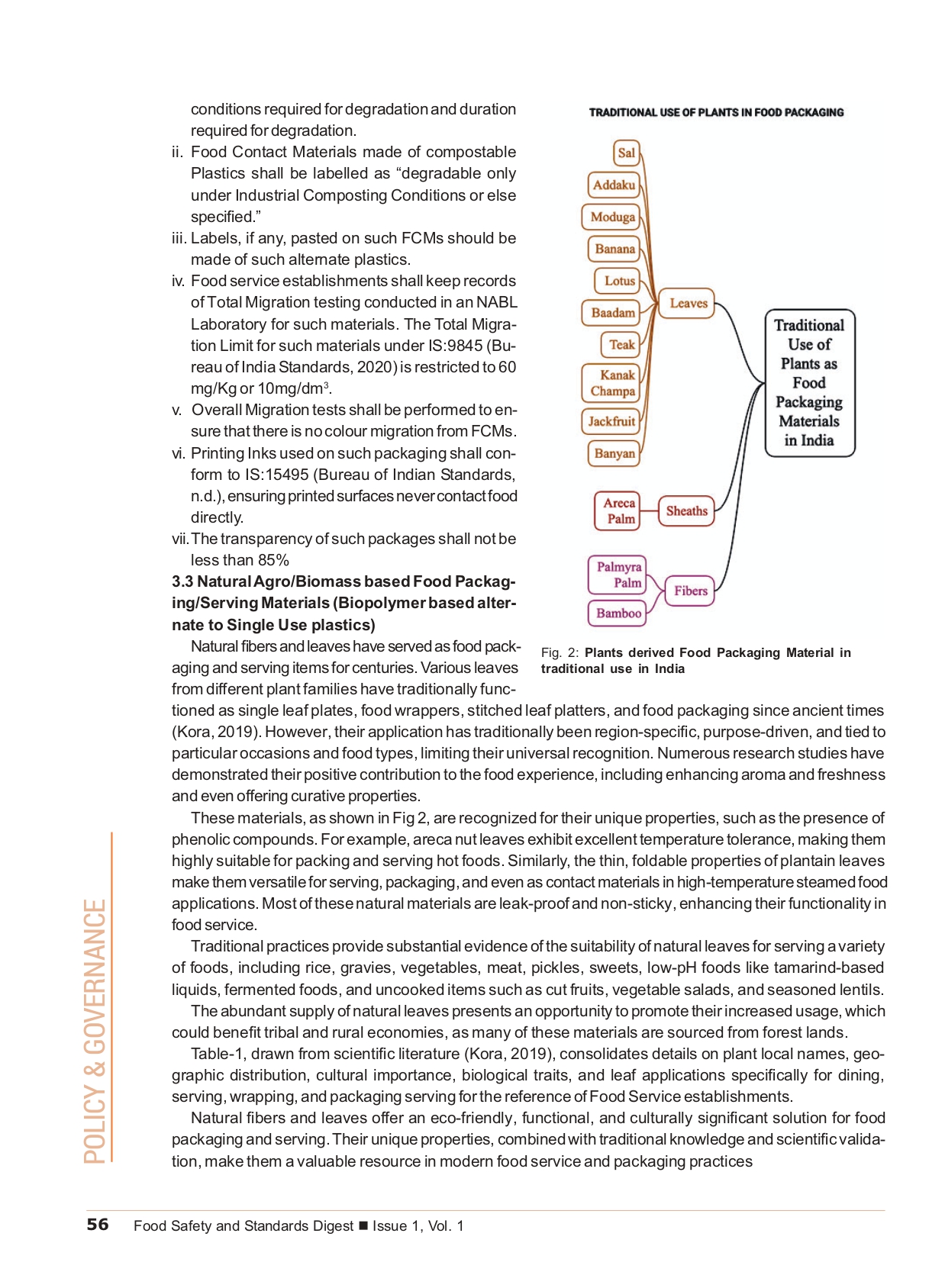
These materials, as shown in Fig 2, are recognized for their unique properties, such as the presence of phenolic compounds. For example, areca nut leaves exhibit excellent temperature tolerance, making them highly suitable for packing and serving hot foods. Similarly, the thin, foldable properties of plantain leaves make them versatile for serving, packaging, and even as contact materials in high-temperature steamed food applications. Most of these natural materials are leak-proof and non-sticky, enhancing their functionality in food service.

Traditional practices provide substantial evidence of the suitability of natural leaves for serving a variety of foods, including rice, gravies, vegetables, meat, pickles, sweets, low-pH foods like tamarind-based liquids, fermented foods, and uncooked items such as cut fruits, vegetable salads, and seasoned lentils. The abundant supply of natural leaves presents an opportunity to promote their increased usage, which could benefit tribal and rural economies, as many of these materials are sourced from forest lands.

Natural fibres and leaves offer an eco-friendly, functional, and culturally significant solution for food packaging and serving. Their unique properties, combined with traditional knowledge and scientific validation, make them a valuable resource in modern food service and packaging practices.

Fig 2: Plants Derived Food Packaging Material

Fig 2: Plants Derived Food Packaging Material in Traditional Use in India

Banana Leaves

Used as plates, wrappers during steam cooking. Versatile, thin, foldable.

Areca Nut Sheaths

Leak-proof, water resistant, microwave & oven safe. Excellent thermal resistance.

Sal Leaves

Fresh leaves for snacks; dried & stitched into plates and bowls.

Teak Leaves

Cups for soups, cereals, raita, dal. Also used as food-serving plates.

Lotus Leaves

Hand-stitched into plates for serving food.

Bamboo

Thermal resistance up to 200°C/400°F. Ideal for insulating hot or cold foods.

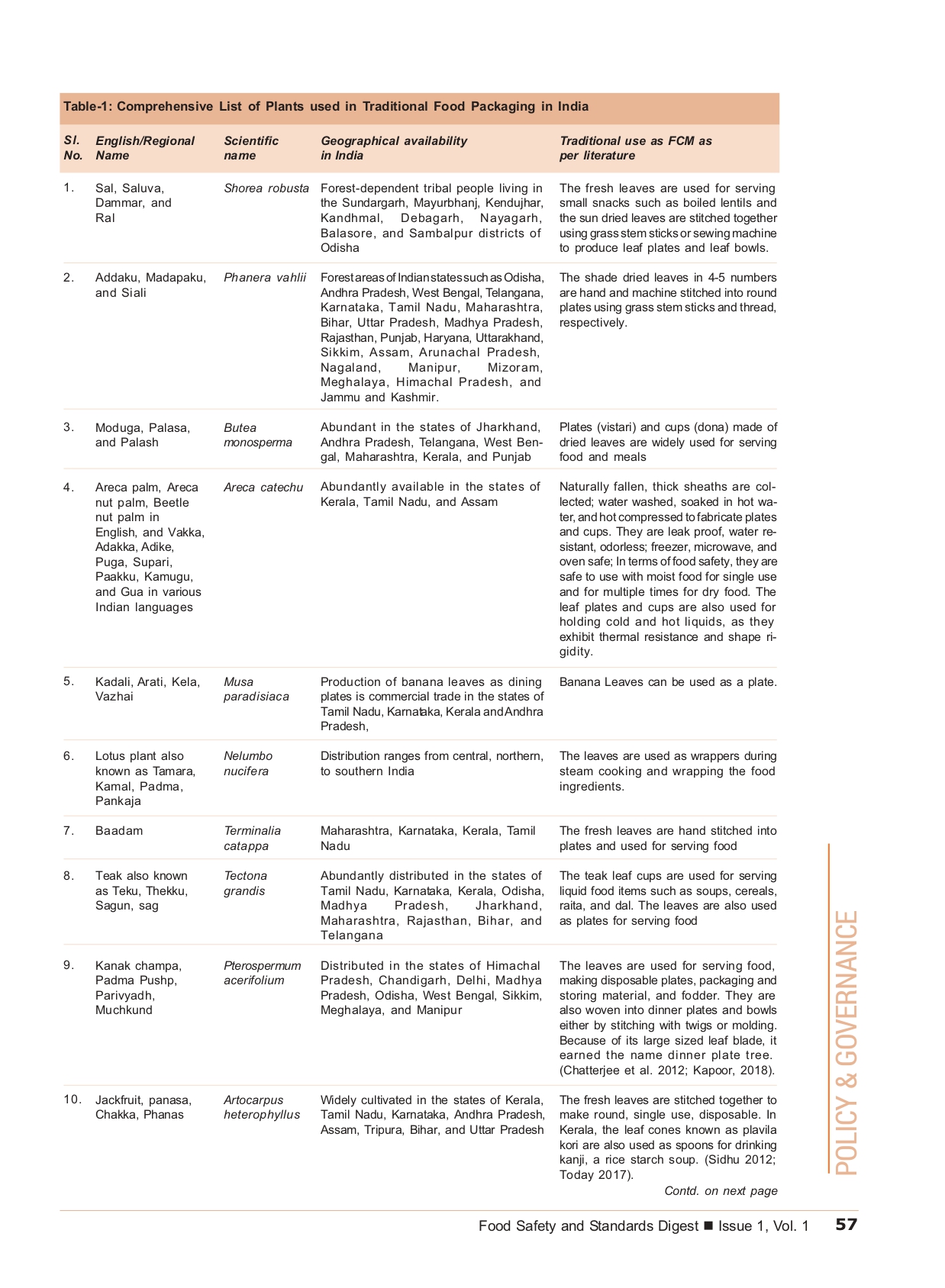
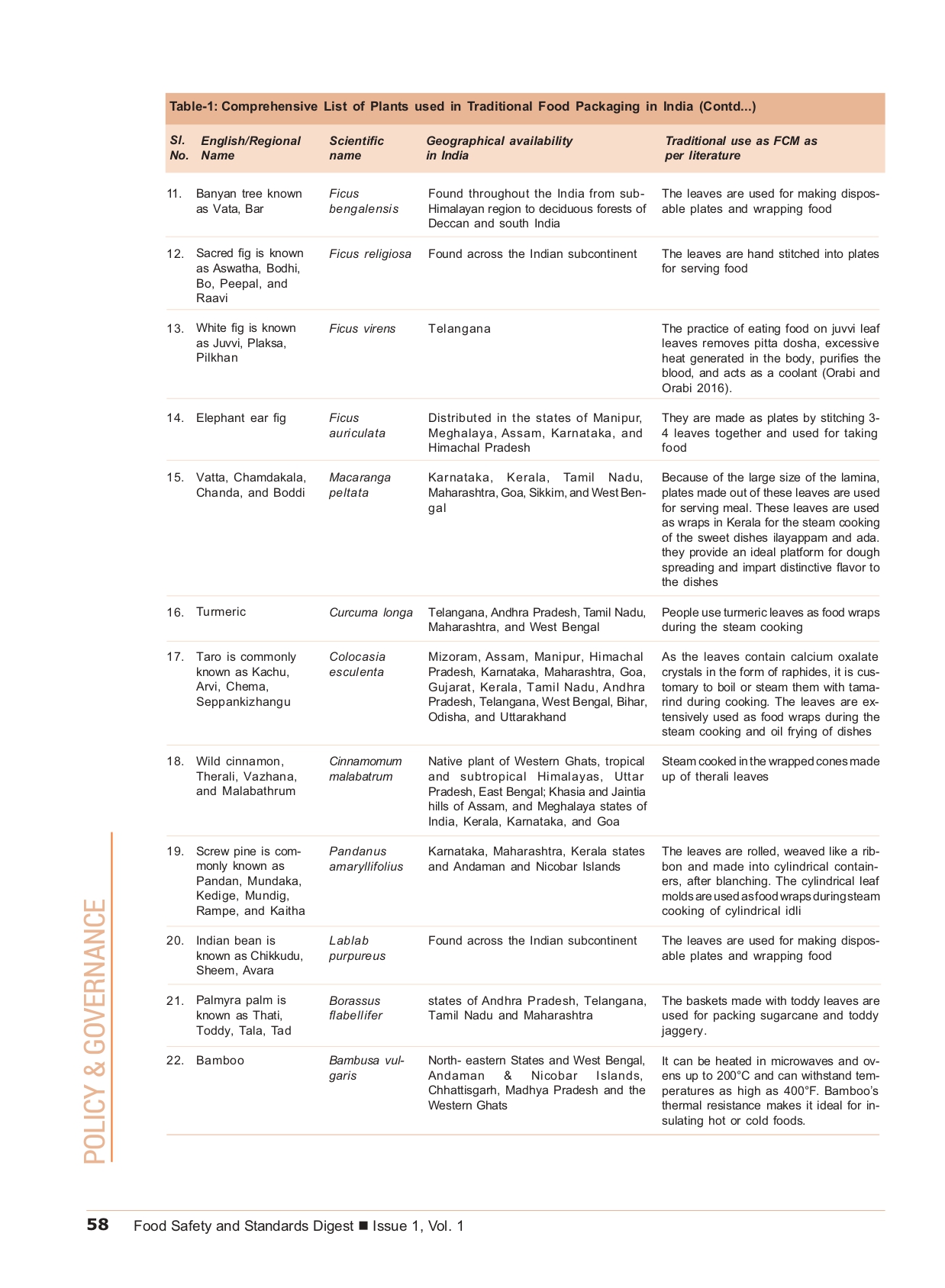
Table 1, drawn from scientific literature (Kora, 2019), consolidates details on plant local names, geographic distribution, cultural importance, biological traits, and leaf applications specifically for dining, serving, wrapping, and packaging for the reference of Food Service establishments.

Table 1: Comprehensive List of Plants Used in Traditional Food Packaging in India
Sl. No. English/Regional Name Scientific Name Geographical Availability in India Traditional Use as FCM as per Literature
1 Sal, Saluva, Dammar, and Ral Shorea robusta Forest-dependent tribal people living in the Sundargarh, Mayurbhanj, Kendujhar, Kandhmal, Debagarh, Nayagarh, Balasore, and Sambalpur districts of Odisha The fresh leaves are used for serving small snacks such as boiled lentils and the sun dried leaves are stitched together using grass stem sticks or sewing machine to produce leaf plates and leaf bowls.
2 Addaku, Madapaku, and Siali Phanera vahlii Forest areas of Indian states such as Odisha, Andhra Pradesh, West Bengal, Telangana, Karnataka, Tamil Nadu, Maharashtra, Bihar, Uttar Pradesh, Madhya Pradesh, Rajasthan, Punjab, Haryana, Uttarakhand, Sikkim, Assam, Arunachal Pradesh, Nagaland, Manipur, Mizoram, Meghalaya, Himachal Pradesh, and Jammu and Kashmir The shade dried leaves in 4–5 numbers are hand and machine stitched into round plates using grass stem sticks and thread, respectively.
3 Moduga, Palasa, and Palash Butea monosperma Abundant in the states of Jharkhand, Andhra Pradesh, Telangana, West Bengal, Maharashtra, Kerala, and Punjab Plates (vistari) and cups (dona) made of dried leaves are widely used for serving food and meals.
4 Areca palm, Areca nut palm, Beetle nut palm (English); Vakka, Adakka, Adike, Puga, Supari, Paakku, Kamugu, Gua (Indian languages) Areca catechu Abundantly available in the states of Kerala, Tamil Nadu, and Assam Naturally fallen, thick sheaths are collected; water washed, soaked in hot water, and hot compressed to fabricate plates and cups. They are leak proof, water resistant, odorless; freezer, microwave, and oven safe. In terms of food safety, they are safe to use with moist food for single use and for multiple times for dry food. The leaf plates and cups are also used for holding cold and hot liquids, as they exhibit thermal resistance and shape rigidity.
5 Kadali, Arati, Kela, Vazhai Musa paradisiaca Production of banana leaves as dining plates is commercial trade in the states of Tamil Nadu, Karnataka, Kerala and Andhra Pradesh Banana Leaves can be used as a plate. The leaves are used as wrappers during steam cooking and wrapping the food ingredients.
6 Lotus plant also known as Tamara, Kamal, Padma, Pankaja Nelumbo nucifera Distribution ranges from central, northern, to southern India The fresh leaves are hand stitched into plates and used for serving food.
7 Baadam Terminalia catappa Maharashtra, Karnataka, Kerala, Tamil Nadu The leaves are used for making disposable plates and wrapping food.
8 Teak also known as Teku, Thekku, Sagun, Sag Tectona grandis Abundantly distributed in the states of Tamil Nadu, Karnataka, Kerala, Odisha, Madhya Pradesh, Jharkhand, Maharashtra, Rajasthan, Bihar, and Telangana The teak leaf cups are used for serving liquid food items such as soups, cereals, raita, and dal. The leaves are also used as plates for serving food.
9 Kanak champa, Padma Pushp, Parivyadh, Muchkund Pterospermum acerifolium Distributed in the states of Himachal Pradesh, Chandigarh, Delhi, Madhya Pradesh, Odisha, West Bengal, Sikkim, Meghalaya, and Manipur The leaves are used for serving food, making disposable plates, packaging and storing material, and fodder. They are also woven into dinner plates and bowls either by stitching with twigs or molding. Because of its large sized leaf blade, it earned the name dinner plate tree (Chatterjee et al. 2012; Kapoor, 2018).
10 Jackfruit, Panasa, Chakka, Phanas Artocarpus heterophyllus Widely cultivated in the states of Kerala, Tamil Nadu, Karnataka, Andhra Pradesh, Assam, Tripura, Bihar, and Uttar Pradesh The fresh leaves are stitched together to make round, single use, disposable plates. In Kerala, the leaf cones known as plavila kori are also used as spoons for drinking kanji, a rice starch soup (Sidhu 2012; Today 2017).
11 Banyan tree known as Vata, Bar Ficus bengalensis Found throughout India from sub-Himalayan region to deciduous forests of Deccan and south India The leaves are used for making disposable plates and wrapping food.
12 Sacred fig known as Aswatha, Bodhi, Bo, Peepal, Raavi Ficus religiosa Found across the Indian subcontinent The leaves are hand stitched into plates for serving food.
13 White fig known as Juvvi, Plaksa, Pilkhan Ficus virens Telangana The practice of eating food on juvvi leaf removes pitta dosha, excessive heat generated in the body, purifies the blood, and acts as a coolant (Orabi and Orabi, 2016).
14 Elephant ear fig known as Vatta, Chamdakala, Chanda, Boddi Ficus auriculata Distributed in the states of Manipur, Meghalaya, Assam, Karnataka, and Himachal Pradesh They are made as plates by stitching 3–4 leaves together and used for taking food.
15 Macaranga peltata Macaranga peltata Karnataka, Kerala, Tamil Nadu, Maharashtra, Goa, Sikkim, and West Bengal Because of the large size of the lamina, plates made out of these leaves are used for serving meal. These leaves are used as wraps in Kerala for the steam cooking of the sweet dishes ilayappam and ada. They provide an ideal platform for dough spreading and impart distinctive flavour to the dishes.
16 Turmeric Curcuma longa Telangana, Andhra Pradesh, Tamil Nadu, Maharashtra, and West Bengal People use turmeric leaves as food wraps during the steam cooking.
17 Taro commonly known as Kachu, Arvi, Chema, Seppankizhangu Colocasia esculenta Mizoram, Assam, Manipur, Himachal Pradesh, Karnataka, Maharashtra, Goa, Gujarat, Kerala, Tamil Nadu, Andhra Pradesh, Telangana, West Bengal, Bihar, Odisha, and Uttarakhand As the leaves contain calcium oxalate crystals in the form of raphides, it is customary to boil or steam them with tamarind during cooking. The leaves are extensively used as food wraps during the steam cooking and oil frying of dishes.
18 Wild cinnamon, Therali, Vazhana, and Malabathrum Cinnamomum malabatrum Native plant of Western Ghats, tropical and subtropical Himalayas, Uttar Pradesh, East Bengal; Khasia and Jaintia hills of Assam, and Meghalaya states of India, Kerala, Karnataka, and Goa Steam cooked in the wrapped cones made up of therali leaves.
19 Screw pine commonly known as Pandan, Mundaka, Kedige, Mundig, Rampe, Kaitha Pandanus amaryllifolius Karnataka, Maharashtra, Kerala states and Andaman and Nicobar Islands The leaves are rolled, weaved like a ribbon and made into cylindrical containers, after blanching. The cylindrical leaf molds are used as food wraps during steam cooking of cylindrical idli.
20 Indian bean known as Chikkudu, Sheem, Avara Lablab purpureus Found across the Indian subcontinent, states of Andhra Pradesh, Telangana, Tamil Nadu and Maharashtra The leaves are used for making disposable plates and wrapping food.
21 Palmyra palm known as Thati, Toddy, Tala, Tad Borassus flabellifer North-eastern States and West Bengal, Andaman & Nicobar Islands, Chhattisgarh, Madhya Pradesh and the Western Ghats The baskets made with toddy leaves are used for packing sugarcane and toddy jaggery.
22 Bamboo Bambusa vulgaris North-eastern States and West Bengal, Andaman & Nicobar Islands, Chhattisgarh, Madhya Pradesh and the Western Ghats It can be heated in microwaves and ovens up to 200°C and can withstand temperatures as high as 400°F. Bamboo's thermal resistance makes it ideal for insulating hot or cold foods.

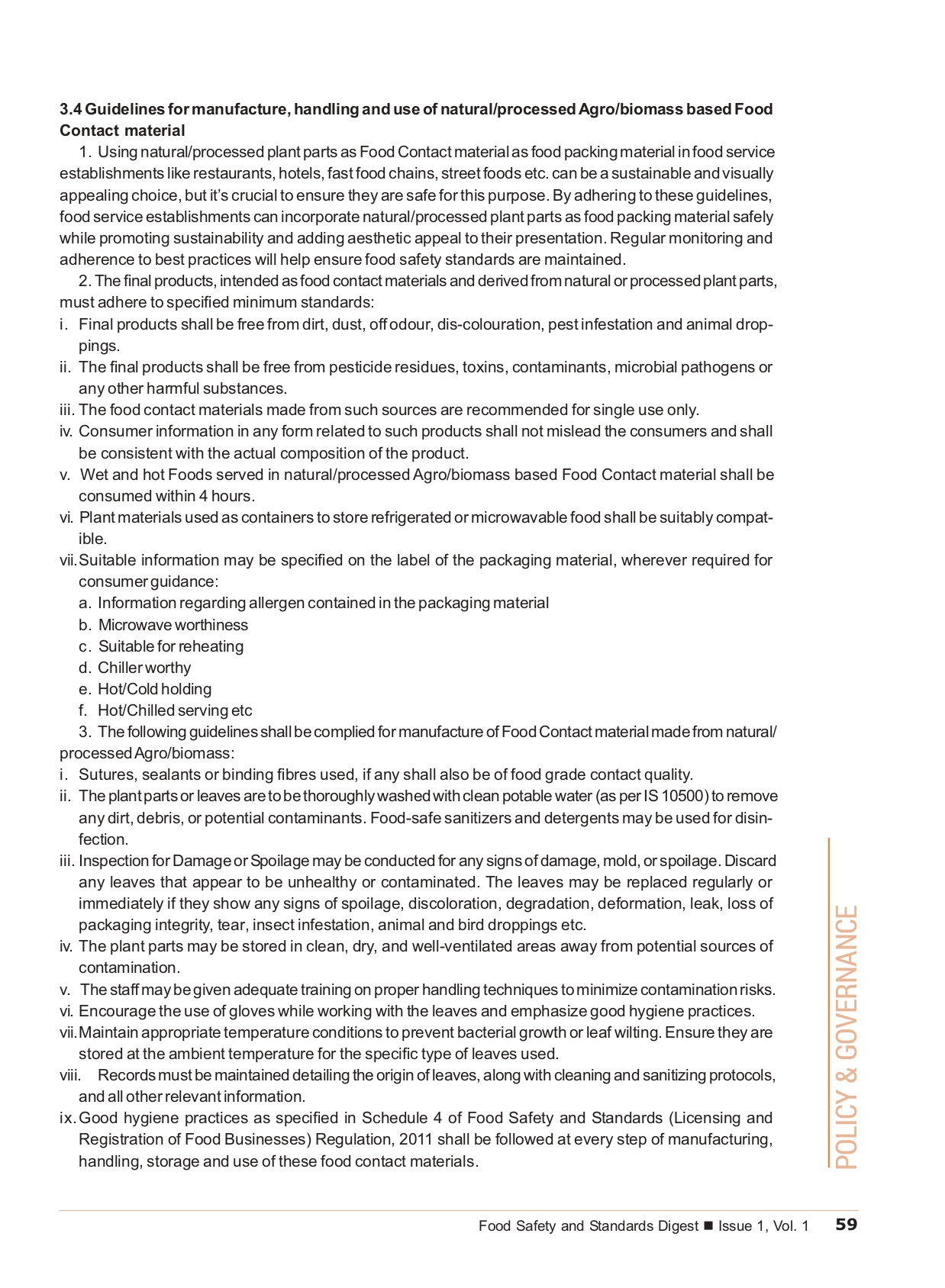
3.4 Guidelines for Manufacture, Handling and Use of Natural/Processed Agro/Biomass Based Food Contact Material

1. Using natural/processed plant parts as Food Contact material as food packing material in food service establishments like restaurants, hotels, fast food chains, street foods etc. can be a sustainable and visually appealing choice, but it's crucial to ensure they are safe for this purpose. By adhering to these guidelines, food service establishments can incorporate natural/processed plant parts as food packing material safely while promoting sustainability and adding aesthetic appeal to their presentation. Regular monitoring and adherence to best practices will help ensure food safety standards are maintained.

2. The final products, intended as food contact materials and derived from natural or processed plant parts, must adhere to specified minimum standards:

  1. Final products shall be free from dirt, dust, off-odour, dis-colouration, pest infestation and animal droppings.
  2. The final products shall be free from pesticide residues, toxins, contaminants, microbial pathogens or any other harmful substances.
  3. The food contact materials made from such sources are recommended for single use only.
  4. Consumer information in any form related to such products shall not mislead the consumers and shall be consistent with the actual composition of the product.
  5. Wet and hot Foods served in natural/processed Agro/biomass based Food Contact material shall be consumed within 4 hours.
  6. Plant materials used as containers to store refrigerated or microwavable food shall be suitably compatible.
  7. Suitable information may be specified on the label of the packaging material, wherever required for consumer guidance:
    • Information regarding allergen contained in the packaging material
    • Microwave worthiness
    • Suitable for reheating
    • Chiller worthy
    • Hot/Cold holding
    • Hot/Chilled serving etc.

3. The following guidelines shall be complied for manufacture of Food Contact material made from natural/processed Agro/biomass:

  1. Sutures, sealants or binding fibres used, if any shall also be of food grade contact quality.
  2. The plant parts or leaves are to be thoroughly washed with clean potable water (as per IS 10500) to remove any dirt, debris, or potential contaminants. Food-safe sanitizers and detergents may be used for disinfection.
  3. Inspection for Damage or Spoilage may be conducted for any signs of damage, mold, or spoilage. Discard any leaves that appear to be unhealthy or contaminated. The leaves may be replaced regularly or immediately if they show any signs of spoilage, discoloration, degradation, deformation, leak, loss of packaging integrity, tear, insect infestation, animal and bird droppings etc.
  4. The plant parts may be stored in clean, dry, and well-ventilated areas away from potential sources of contamination.
  5. The staff may be given adequate training on proper handling techniques to minimize contamination risks.
  6. Encourage the use of gloves while working with the leaves and emphasize good hygiene practices.
  7. Maintain appropriate temperature conditions to prevent bacterial growth or leaf wilting. Ensure they are stored at the ambient temperature for the specific type of leaves used.
  8. Records must be maintained detailing the origin of leaves, along with cleaning and sanitizing protocols, and all other relevant information.
  9. Good hygiene practices as specified in Schedule 4 of Food Safety and Standards (Licensing and Registration of Food Businesses) Regulation, 2011 shall be followed at every step of manufacturing, handling, storage and use of these food contact materials.

References

Bureau of Indian Standards. (2020). IS 15495: Printing ink for food packaging – Code of practice. BIS.

Bureau of Indian Standards. (n.d.). IS 9845: Determination of overall migration of constituents of plastic materials and articles intended to come into contact with foodstuffs – Method of analysis. BIS.

Kora, A. J. (2019). Leaves as dining plates, food wraps and food packing material: Importance of renewable resources in Indian culture. Bulletin of the National Research Centre, 43, Article 205. https://doi.org/10.1186/s42269-019-0231-6

Author Biography

Vishali K, Priya Singh, Shailender Kumar, Perumal Karthikeyan, Amit Sharma, Ravindra Singh, Avinash Mishra, Rajeev Kumar Dwivedi, Rajeshwar Matche, Sanjay Kumar Chattopadhyay, Pasupathy Venkat, Kamlesh Singh, Alka Rao and Vimal Katiyar

Food Safety and Standards Authority of India, New Delhi; NITI Aayog, New Delhi; Technical Training & Research Centre, Kanpur; CSIR–CFTRI, Mysuru; Department of Chemicals & Petrochemicals, New Delhi; Federation of Hotel & Restaurant Association of India, New Delhi; CPCB, New Delhi; CSIR–IMTECH, Chandigarh; AcSIR, Ghaziabad; CCRAS, New Delhi; Indian Institute of Technology, Guwahati

Correspondence Email: vkatiyar@iitg.ac.in